
Start with the people
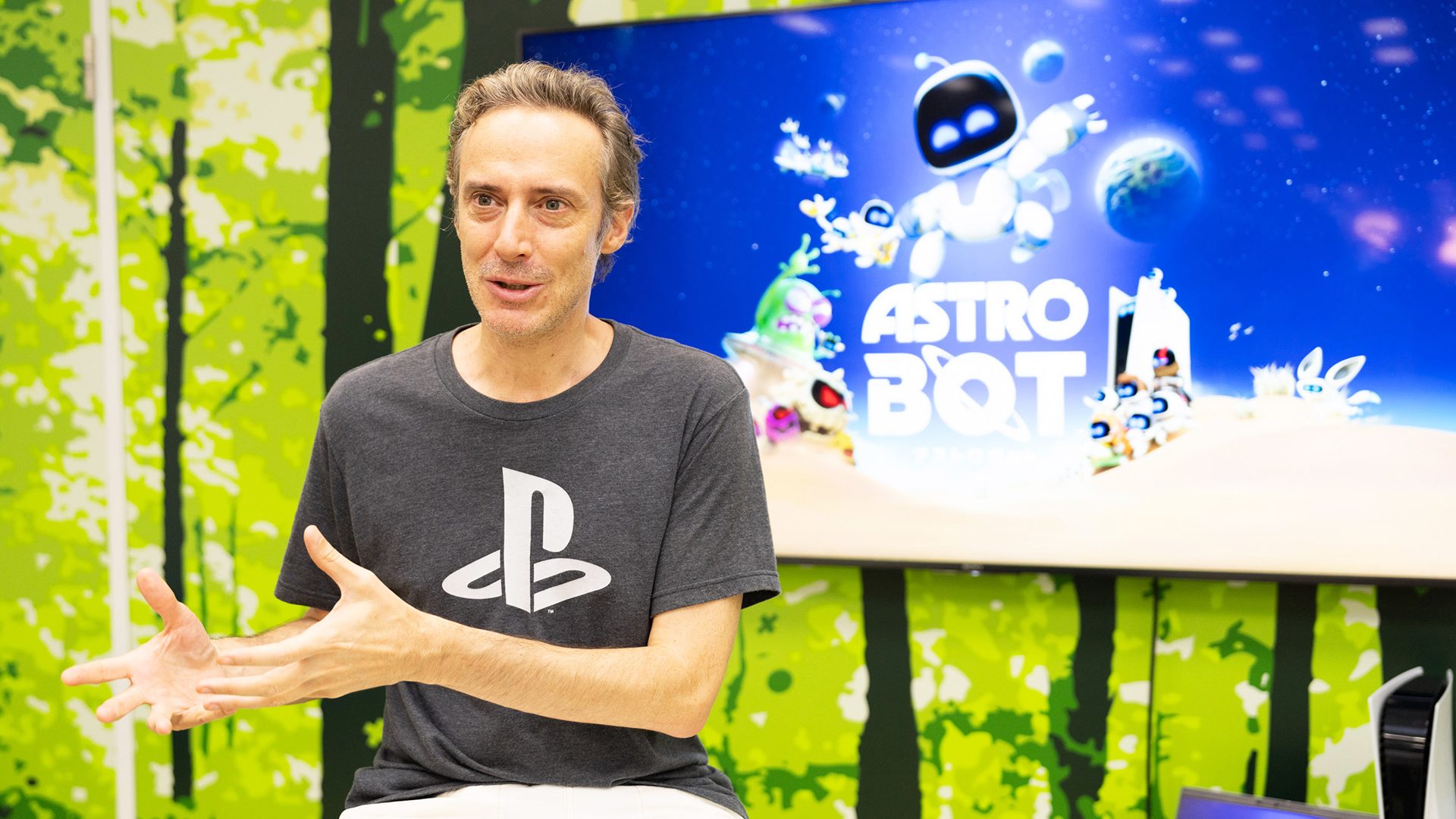
In PlayStation Blog’s September 2024 studio interview, principal animation director Jamie Smith, principal art director Sebastian Brueckner, senior animator Maki Murakami and principal gameplay programming lead Masayuki Yamada describe different parts of Astro Bot’s development. Their accounts put the interaction at the beginning of the process. This is a look back at that interview, not a new game announcement or an interview conducted by Gaming Is Culture.
What the team described
Brueckner says the team chooses ideas around how they improve gameplay, then develops the world’s details. Yamada describes programmers testing primitive models before artists elevate the experience. Murakami uses the climbing-focused Handy-D power-up to explain how a functional idea becomes a character design through prototyping, playtesting and refinement. Smith describes drawing on children’s expressions of joy when thinking about animation. These accounts connect the final personality to specific disciplines.
Our perspective: polish should explain the action
The interesting lesson is not that art comes last in some universal production order. It is that a visual decision can carry practical information. When an object looks graspable, when a movement telegraphs a landing, or when a reaction makes success easy to read, appearance and play support each other. A beautiful image and a readable action are different achievements. Our interpretation is that the strongest design conversation asks how to make them reinforce one another.
A question for anyone building a prototype
Our suggested exercise is to describe an interaction without naming its final art: the player pulls, climbs, balances or launches. Then ask a new tester what they believe the input will do. If the answer is unclear, a finished texture may not resolve the underlying confusion. If the action is already legible, animation and sound have a clearer job. This is an editorial exercise inspired by the interview, not a claim that Team Asobi uses this exact checklist.
For fans, watch the transition
The next time you play a platformer, pause your attention on the moment before and after an action. What tells you it is available? What confirms you did it? What makes you want to repeat it? Thinking in those terms can make the contribution of an animator or gameplay programmer easier to notice. It also makes a credit roll feel less abstract: the finished game is full of decisions that someone had to make, test and revise.
Give the craft a name
A studio identity is built through people working across boundaries. The value of this interview is that it lets us attach names and roles to that collaboration without pretending any one person created the whole experience. Our Behind the Games coverage will keep returning to that question: which piece of work changed what a player could understand, feel or do? That is a more useful conversation than calling a finished game polished and leaving it there.