
Listen to the development story
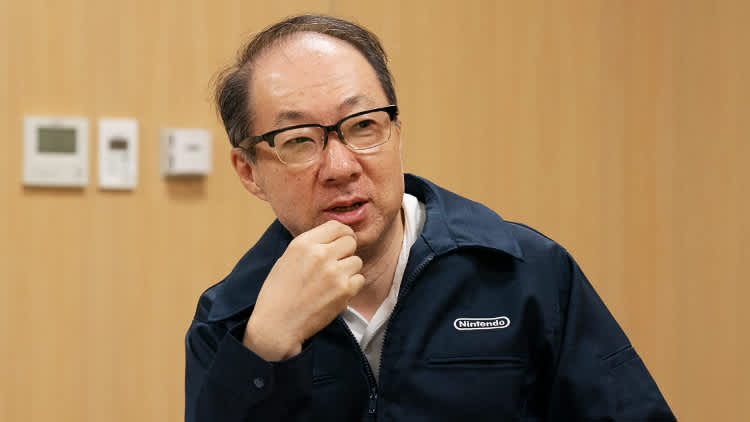
Nintendo’s 2023 Ask the Developer discussion of Super Mario Bros. Wonder includes Koji Kondo describing sound staff as game creators who should contribute ideas beyond their immediate discipline. He says the sound team participated from early development and worked with programmers on prototypes. We are revisiting that account to examine the production lesson; this is not a new appointment, an exclusive interview or a new release announcement.
When music changes the level
Kondo describes testing Piranha Plants emerging in time with music, with level designers creating moving pipes and platforms. The idea expanded into enemies and stage elements responding to rhythm. He also describes the difficulty of coordinating people with different knowledge: level designers were less familiar with musical beat and metre, while sound staff were less familiar with level design. Nintendo’s account makes the collaboration visible, including the friction.
Our perspective: timing is a design material
If sound arrives only after an interaction is fixed, its assignment may be to describe what already happens. Bringing audio into an experiment earlier creates room to ask a different question: could the action happen differently because of what the player hears? Our interpretation is that this expands the possible conversation. It does not mean every project should become a musical, or that every team has the resources to put every discipline in every meeting.
Try a small, specific experiment
For a team exploring an interaction, our suggestion is to prototype a single audible cue alongside a single action. Ask whether the cue helps a player anticipate timing, understand a response or notice a change. Compare it with the same moment without the cue. Keep the question narrow enough that people can discuss what they observed rather than defend an entire soundtrack. This proposed exercise is ours; Nintendo does not present it as its own process.
The fan’s version of that question
As a player, listen for moments when music appears connected to what the world does. Does the sound help you prepare, or does it celebrate something after it happens? Can you tell which response belongs to your action? Those observations provide a way to appreciate audio as part of the play experience. They are also questions worth bringing to a developer interview, where the team can explain the actual implementation instead of leaving us to guess.
Credit the connection
The useful story here is about collaboration, not a lone-composer myth. Programmers, level designers and audio specialists have different tools for shaping the same moment. Naming those contributions is part of recognizing the professionals behind a game. Wonder’s development discussion gives us a concrete starting point: an idea crossed a departmental boundary, people had to learn how to communicate it, and the interaction took shape through that work.