
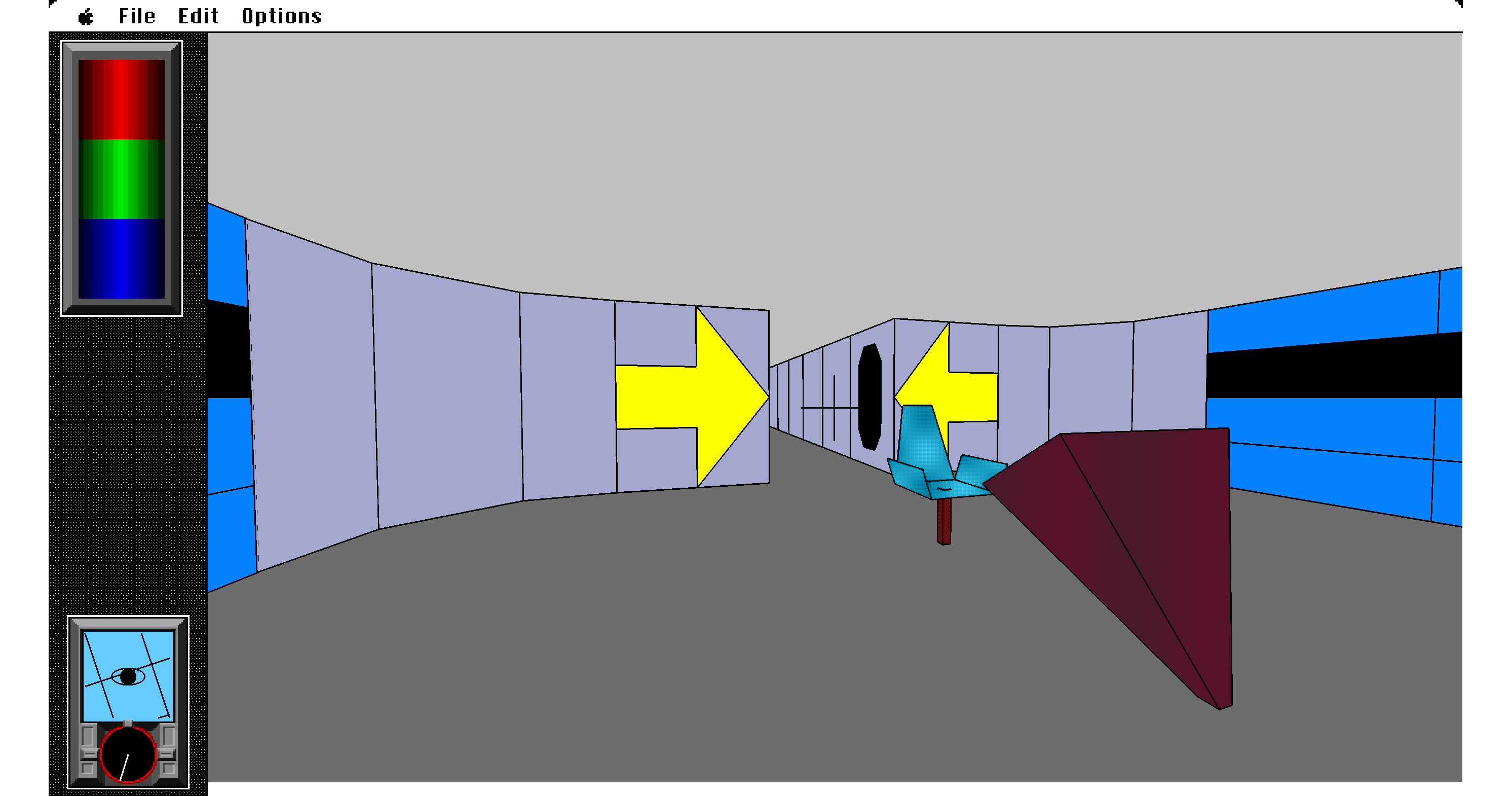
A new call for testers
ScummVM announced on October 15 that The Colony is ready for public testing. The project names Macintosh and DOS releases for this testing period and says players need the original game data files. This is a testing invitation; it should not be read as a claim that every version is finished or that every issue has been resolved.
The game behind the invitation
The project’s announcement credits David Alan Smith as creator and Mindscape as publisher of the 1988 game. It describes a first-person 3D environment combining exploration, puzzles and combat. ScummVM itself replaces supported games’ original executables while using their data files. Its own description explicitly distinguishes that approach from emulation. That technical distinction helps explain why supporting an old game involves more than placing an old file on a modern computer.
Our perspective: compatibility is a relationship
An older game is a useful reminder that software depends on assumptions: how a scene loads, how a command is interpreted, what the player sees after an action. Our view is that preservation coverage should ask whether the experience remains understandable and repeatable, not stop at a successful launch screen. A working opening scene cannot, by itself, establish that later puzzles, saves or transitions behave correctly. Testing is where those questions become concrete.
How to make a report helpful
ScummVM asks testers to use its issue tracker and bug-submission guidelines; the announcement specifically welcomes screenshots and saved games. Our suggested preparation is to write down the exact edition you used, the build you tested, your operating system, the steps before the problem and what you expected to happen. Keep a copy of the relevant save if possible. Check the project’s instructions before uploading anything, and avoid attaching personal information that is unrelated to the issue.
Contribution is bigger than code
Our perspective: a precise reproduction can save a maintainer an evening of guessing. Clear documentation can help the next tester distinguish an installation mistake from a real defect. A respectful follow-up can show whether a fix solved the problem. These are meaningful forms of contribution for fans who do not write engine code. They also deserve visible credit when we talk about who keeps a game playable.
What happens next matters
We would judge progress through the project’s subsequent release notes and resolved reports, rather than assume the testing announcement is the finish line. For now, the useful action is to follow the official instructions and contribute careful observations. The culture around games includes the people who make new worlds and the people who patiently help us revisit old ones. This is one place where that second group’s work becomes visible.