
The window is still open
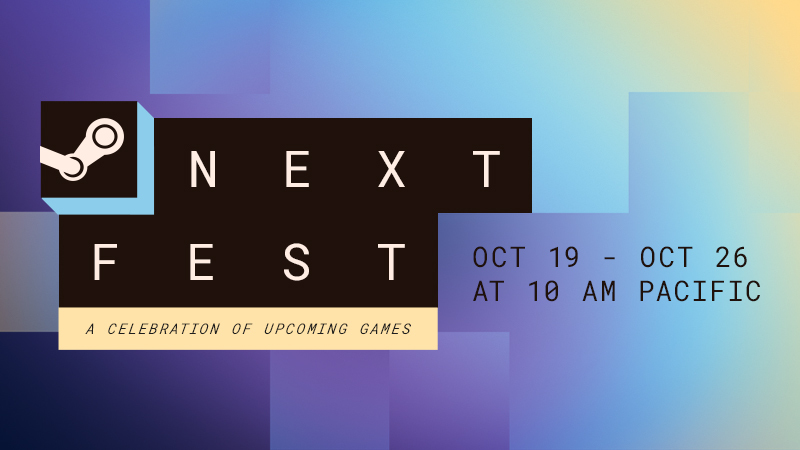
Steam Next Fest’s October 2026 edition runs from October 19 to October 26, ending at 10 a.m. Pacific. Valve describes it as a chance to play demos, meet developers, watch streams and discover upcoming releases. For participating teams, the event also offers an opportunity to gather feedback and build an audience before launch. Those are opportunities, not a promise of sales.
What the event can tell you
Our perspective: a demo gives a studio something a trailer cannot—a chance to see where the player’s understanding meets the actual controls. Someone may understand the premise immediately but miss the first objective. Another player may love the movement and still quit at the settings screen. Treating both as a single positive-or-negative verdict throws away the useful detail. The practical question is where interest turns into understanding, frustration or curiosity.
A useful feedback note
For players, our suggested approach is simple: describe what you expected, what you did, and what happened. “I thought the highlighted door was the exit; I tried interacting twice; I could not tell whether it was locked” gives a team more to investigate than “the level is confusing.” Include your platform and input method when they matter. Separate a repeatable technical problem from a preference about difficulty, and avoid assuming a demo represents every feature planned for release.
A practical debrief for a small team
Our recommendation is to sort feedback into three working lists: problems that block play, moments that obscure the game’s appeal, and ideas worth exploring later. Record the evidence beside each item. A single report can identify a real bug, but one requested feature is not automatically a mandate. Give a specific person responsibility for following up, and distinguish fixes that are safe during the event from changes that need more testing. This is our proposed workflow, not a Valve requirement.
The people behind the build
A public demo sits at the intersection of development, production, QA, community work and marketing. Our editorial interest is in the handoffs: can a community manager explain a known issue, can QA reproduce a report, and can a designer understand why a player got stuck? A useful post-event story would connect those observations to decisions. A wishlist total alone cannot explain the work or establish how many people will buy the game.
What we would ask after the festival
Which part of the demo communicated the game most clearly? What surprised the team? Which change did player feedback actually support? Those are the questions we would bring to a follow-up, rather than declaring a winner from visibility alone. If you are discovering a game this weekend, leave its creators something specific they can use. If you are on a team, preserve the context behind the feedback before the event becomes another spreadsheet.