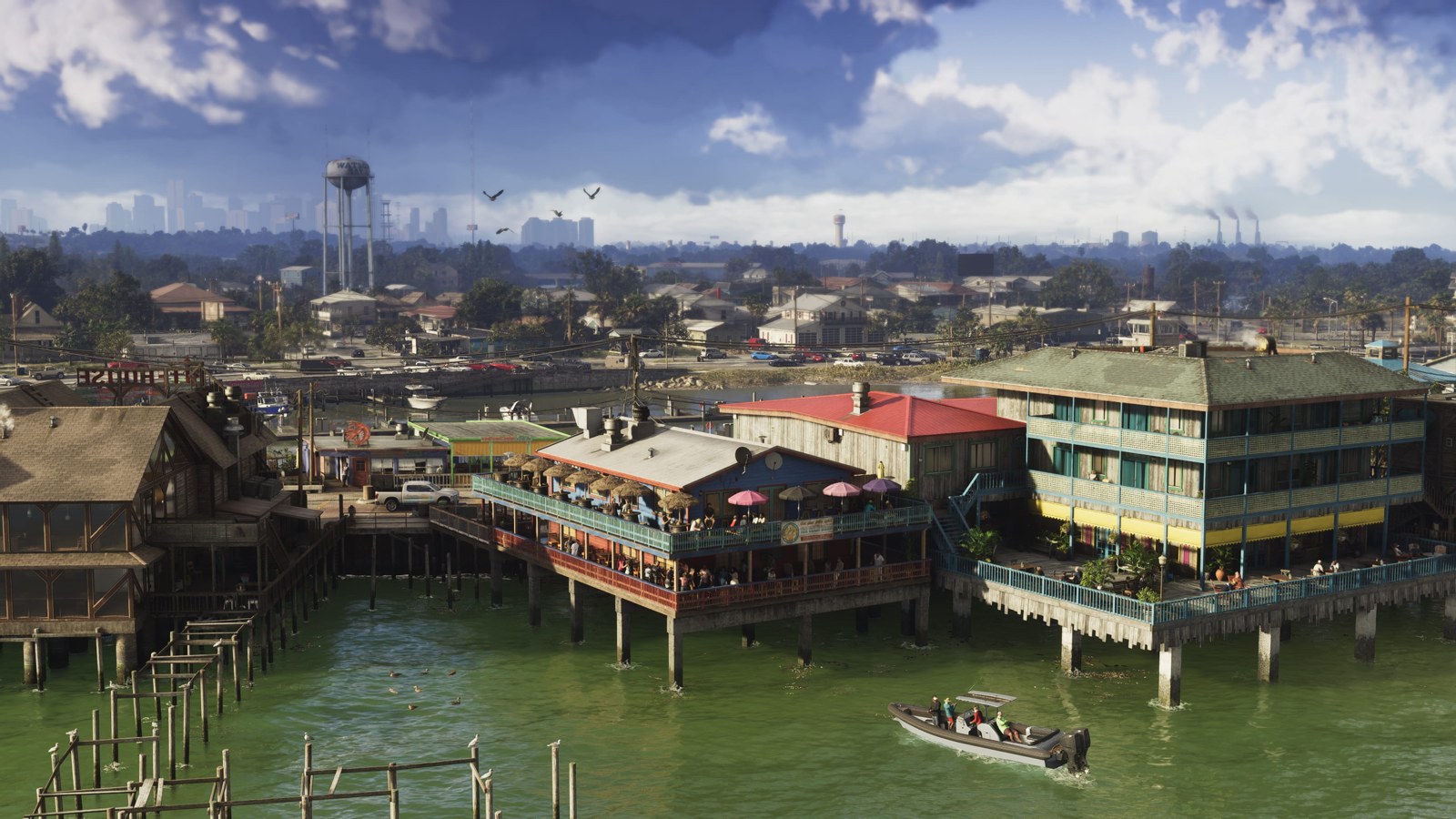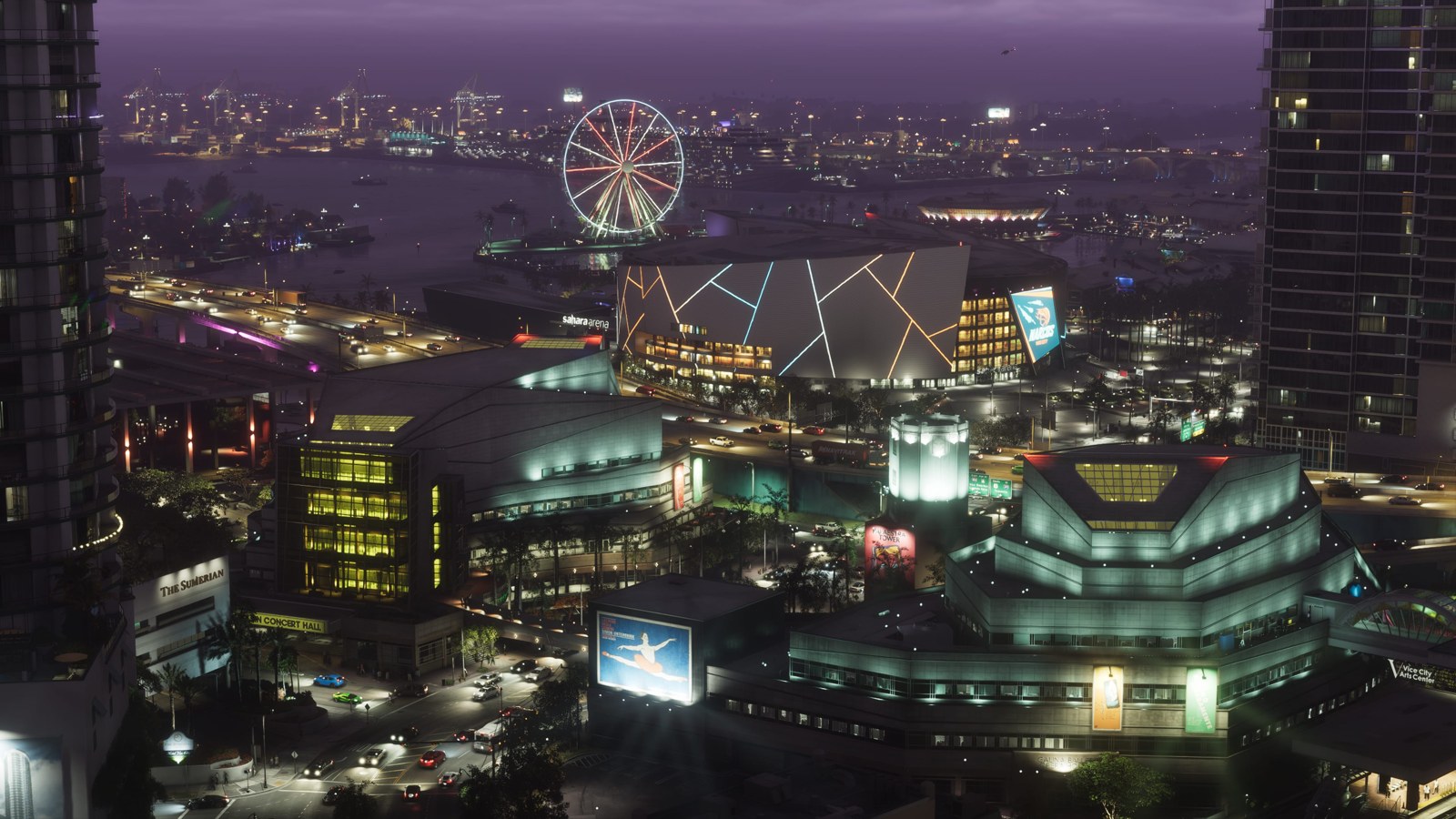
A city you learn through movement
You remember a GTA city through the things you do inside it. A bridge becomes the place where you lost a pursuit. A steep road becomes the shortcut that almost worked. A storefront becomes the landmark you use to explain a meeting place to a friend. The map gives those experiences somewhere to stick, and repeated journeys turn unfamiliar streets into a place you can navigate with confidence.
That helps explain why a conversation about an older GTA can quickly become a conversation about neighborhoods. Players can disagree about a mission while recognizing the same junction. You can compare routes, describe a favorite view or recall the road leading away from a safe house. Shared geography gives the conversation something concrete to build on.
Rockstar's official Vice City description connects its open setting with a character-led story, while GTA V places its action across Los Santos and Blaine County. GTA 6 returns to Vice City within Leonida. Those official descriptions establish the settings. The discussion below is our reading of how a playable city can become memorable, with GTA 6 still awaiting a full review.
Landmarks help you build a mental map
Normally, your first route through an unfamiliar game world depends heavily on the map. You follow a line, miss a turn and circle back. Over time, a few features begin to organize the journey. Water establishes an edge. A large structure gives you a direction. An unusual intersection tells you that your destination is close.
A useful landmark works across several kinds of movement. You might first see it from a car, recognize it during a mission, then use it to orient yourself on foot. That repeated appearance makes the surrounding streets easier to connect. You begin to understand how one district relates to another, even when you haven't memorized individual road names.
For you as a player, the reward is a small but satisfying change in attention. You can spend less effort checking the route and more effort choosing how to travel. A map that supports this learning can feel familiar without requiring you to study it. When evaluating a new GTA city, that's a stronger question to ask than simply counting its landmarks.
Leonida gives us named places to investigate
Rockstar's official location material names Vice City, Leonida Keys, Grassrivers, Port Gellhorn, Ambrosia and Mount Kalaga. These names give a future city review a useful reporting route: assess how each place is introduced, how journeys connect them and which features make the transitions readable. Their appearance in promotional material doesn't establish travel times or unrestricted access.
The comparison can be specific without becoming a map-size contest. Returning to Vice City gives an older player a name with history, while a first-time player needs the new presentation to establish its own identity. A memorable journey should work for both. An older reference can add another layer, but the route still needs to make sense when you have no memory of an earlier game.
That is the test our review should apply after release. Follow the connections, identify the useful landmarks and explain which journeys invite another visit. A list of place names starts the investigation; repeated travel supplies the evidence.
Roads give neighborhoods a rhythm
A wide road and a tight street create different decisions. One invites speed and long sightlines. The other asks you to judge corners, obstacles and limited space. When those road types connect sensibly, your journey has a rhythm. You accelerate, slow down, turn and emerge into a different part of the city.
That rhythm can also help you remember a neighborhood's character. You may recall an area as awkward to escape, easy to cruise through or full of tempting shortcuts. Those impressions come from movement and repeated choices. A district becomes useful to you because you understand what driving there tends to involve.
This is why an impressive overhead map can tell you only part of the story. It shows the arrangement of roads, but your experience depends on their width, visibility, elevation and connections. Two routes of similar distance can produce very different sessions. A meaningful city analysis should describe those journeys and the decisions they create.
Small destinations give you reasons to return
Large landmarks establish orientation, while smaller destinations support routine. A place to change clothes, collect a vehicle or begin an activity can become an anchor. You return for a practical reason, then learn the streets around it. The destination gradually becomes part of the way you organize the wider map.
The strongest routines leave room for variation. You can approach from a different direction, change vehicles or add an optional detour. Repetition teaches the route, and variation keeps you engaged with it. You might discover a useful alley simply because you approached a familiar destination from the other side.
For a player with limited time, that familiarity can be especially useful. You can start a session with a manageable plan and spend it doing something you understand. A large city becomes easier to enjoy when it contains several destinations that feel close at hand. Its size matters less when you know where to begin.
Sound can establish a place before a mission does
City design extends beyond buildings. Music, traffic, voices and ambient sound can help you distinguish one journey from another. A change in what you hear can reinforce the transition between a busy road and a quieter area. It gives the setting another layer of information alongside the image.
Radio also allows a journey to acquire a personal association. You can connect a song with the road you were driving when it played, then remember both together. The same street may feel different on another trip because you changed stations or traveled at a different pace. Your choices shape the memory.
That doesn't mean every player needs the same soundtrack or volume balance. You may prefer quieter driving, spoken programming or music from another source. The design question is whether the game's own sound supports the place and leaves you useful control. An analysis should account for those preferences without assuming one ideal way to listen.
A neighborhood needs a readable character
You don't need every street to announce its identity through a mission. Architecture, road layout, signs and the relationship between buildings can suggest how a district functions. A waterfront, industrial area and entertainment strip can invite different expectations before you interact with anything there.
Consistency helps you learn those expectations, while carefully placed exceptions can make a district interesting. A quiet pocket beside a busy route gives you a reason to slow down. A building with an unusual silhouette can become a meeting point. Those details are useful when they contribute to your sense of location.
There is also a limit to what visual variety can establish. A distinct color palette doesn't prove that a neighborhood supports different activities or has deeper systems. When reviewing GTA 6, we'd need to separate the appearance of variety from the range of experiences available. Both deserve attention, and each needs its own evidence.
Missions can give ordinary places emotional weight
A location can change meaning after something happens there. You may pass through an intersection casually before a mission turns it into a place associated with a difficult escape. Later journeys carry that memory even when the street itself hasn't changed. Story and geography become connected through your participation.
Reusing a place can build on that connection. You recognize an approach, anticipate a turn or remember a previous mistake. The city supports a continuing history of your play. A new event can draw on that history without requiring another explanation of where you are.
For criticism, this creates a useful distinction between a location appearing frequently and a location developing meaning. Repetition alone can become tiring. A return visit earns its place when it changes your understanding, offers a new choice or lets you apply something you learned. That's something a full playthrough can assess more thoroughly than a trailer.
Freedom makes room for personal geography
Some of your most memorable places may have little importance to the story. You can choose a road because you enjoy its bends or stop somewhere because the view suits the moment. An open city gives you opportunities to assign your own value to places. That personal layer can sit alongside the game's intended route.
You can also develop habits that another player never shares. One person repeatedly uses the same vehicle pickup location. Another searches for a quiet place to park before ending a session. Those small routines create different relationships with a shared map, which helps explain why players describe the same city in different ways.
The opportunity depends on how comfortably the game supports wandering. Clear navigation, usable controls and understandable boundaries can make experimentation inviting. Friction can narrow it. A city that feels welcoming to an experienced player may still be difficult for someone learning the camera or driving controls, so accessibility belongs in this discussion too.
Density and scale need to work together
A larger map can offer longer journeys and stronger changes of scenery. It can also require more travel between the things you want to do. A compact area can keep activities close together while limiting the sense of distance. Each approach brings tradeoffs that a simple map-size comparison misses.
Useful density concerns the places where you can make meaningful choices. That can include a junction with several approaches, an area with optional activities or a route with an interesting alternative. Adding more buildings doesn't automatically add more decisions. You need reasons to engage with the space around you.
For GTA 6, the sensible approach is to examine how different regions connect once the game can be assessed. Travel time, repeated routes and the usefulness of optional stops will tell you more about daily play than an unsupported claim about the total number of enterable buildings. Large numbers need context before they help a buying decision.
A shared city becomes a language between players
Once you know a place, you can describe plans through it. You can explain where a clip was recorded, suggest a route or identify a location in a friend's screenshot. The city's recognizable features become a practical language for sharing experiences. That gives community discussion something beyond scores and completion statistics.
It also gives creators a foundation for guides, photography and other projects. A familiar route can support a challenge or comparison. A recognizable location can establish the subject of a video immediately. Those uses depend on the relevant tools and permissions, but the underlying connection begins with shared knowledge of the place.
This community layer deserves reporting with specific examples. A guide can explain a route and why it helps. A creator profile can show how a location supports a project. Claims about what every player remembers are harder to support, so a careful feature should leave room for different experiences and preferences.
What to watch for in GTA VI
Rockstar's official material gives us a setting and a visual introduction. A full assessment will need time spent traveling, revisiting locations and learning how the city responds. The useful questions concern how comfortably you can find your way, what invites return visits and whether the spaces support varied ways to play.
You can apply those questions to your own sessions without turning every drive into an examination. Follow a route twice and see what you recognize. Try a different approach to somewhere familiar. Pay attention to whether optional travel remains enjoyable after the first impression. Those experiences will help you judge how the place works for you.
The lasting appeal of a GTA city can grow from those ordinary journeys. You learn a road, give a corner a memory and develop a reason to come back. A setting earns that attachment through repeated play, and an in-depth review should give it enough time to do so.
Sources and further reading
- Rockstar Games official GTA VI page ↗
- Rockstar Games Only in Leonida ↗
- Rockstar Games Grand Theft Auto Vice City ↗
- Rockstar Games Grand Theft Auto V ↗
Source-based reporting and analysis. Research checked November 10, 2026.