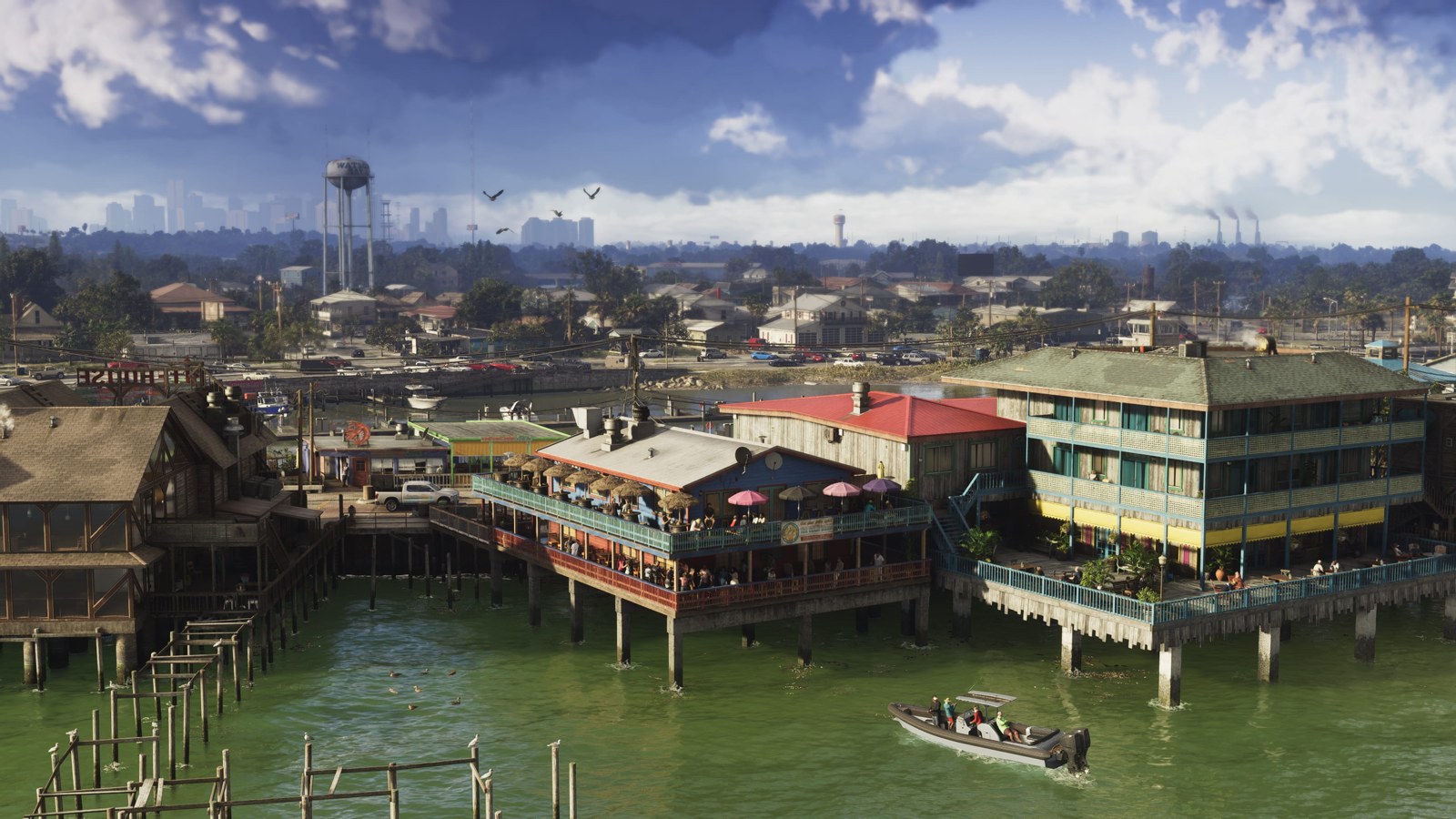
A city can give you a reason to stay
A GTA session can begin with a mission marker and end with an entirely different memory. You take a turn, find a road you haven't used and decide to follow it. The goal you brought into the session gives way to a small discovery you chose yourself. An open world gives that kind of detour room to become an evening.
This article examines the appeal of unstructured play across the series. It isn't a hands-on GTA 6 feature list. As of November 10, 2026, Rockstar's official page lists a November 19 release, so specific activities and restrictions in the finished game need their own verification.
Rockstar's earlier GTA V manual provides examples of a world built around activities as well as missions, including driving, exploration and sports. Those documented examples help explain the broader design appeal. They don't confirm a returning activity in GTA 6. The lasting question is why choosing your own small task can feel satisfying enough to keep you playing.
Freedom starts with choosing the next action
A mission usually gives you a defined objective. Unstructured exploration lets you decide what deserves your attention next. You can follow an interesting shape on the skyline, take a slower vehicle along a familiar route or spend time learning a place that had been background scenery during a chase.
That choice can change the way you read the environment. A road becomes something to learn, a junction becomes a navigation problem and a distant landmark becomes a destination. Your own curiosity supplies the reason to move. The game can remain engaging while the story waits.
You can test this kind of play without inventing an elaborate challenge. Choose a reachable destination and decide how you want to get there using the tools the game provides. Pay attention to whether the journey itself keeps you interested. If it does, you have found a form of play that can fit between larger objectives.
Learning a route can become its own reward
The first time you cross an unfamiliar city, you may depend on a map or a destination marker. After several journeys, a bridge or a particular building can begin to tell you where you are. The route becomes knowledge you carry into the next session.
That knowledge can support a personal challenge. You might navigate between two places without opening a map, take a scenic route or find a smoother approach to a turn. The reward is the change in what you can do comfortably. You can recognize progress even when the game doesn't display a completion message.
Keep the challenge suited to your own preferences. If navigation is a barrier, use the assistance available to you. Free exploration can be enjoyable with a map open throughout. The value comes from choosing how to engage with the world, and that can include the tools that make the journey accessible.
Vehicles turn movement into an activity
Travel can be enjoyable when a vehicle asks you to learn its behavior. A slower approach to a corner, a careful stop or a clean stretch of driving can provide a small goal. The destination still exists, while the process of getting there becomes something you want to improve.
Different games and versions handle vehicles differently, so an analysis should identify what was tested. A clip of one successful stunt doesn't establish how easy it is to repeat or which modifications affected it. You can appreciate a demonstration while keeping its conditions in view.
For your own play, choose one skill and give it a short session. Practice it in a context the game permits, then stop before the task becomes frustrating. You can return later with a clearer sense of what changed. A world with useful space for practice can support enjoyment well beyond the next story checkpoint.
A self-chosen rule can create a fresh game
A familiar world can become a different experience when you give yourself a simple rule. You could travel between landmarks without using a map, obey traffic signals during a drive or explore a route using only a particular kind of vehicle. The rule creates a challenge whose value you decide.
Choose rules that stay within the game's available features and the rules of the mode you are using. A private single-player challenge and a shared multiplayer space have different consequences for other people. Respect the setting and avoid turning another player's session into an obstacle for your entertainment.
Keep a personal challenge small enough to finish or abandon comfortably. A thirty-minute route can offer a clear beginning and ending. You don't need a leaderboard or a reward to know whether you enjoyed it. If you share the idea with friends, describe the conditions clearly so they can try it without guessing what you meant.
Sound gives ordinary travel a different mood
Music and ambient sound can make a routine trip feel distinct. A familiar route with a different station can draw attention to another part of the setting. The sound accompanies your movement and gives a stretch of road an emotional association you may remember afterward.
Rockstar has treated radio as part of its presentation across the series, including official playlists that carry station music beyond the game. You can study that connection through credited music and the context in which a station appears, without assuming a song from one release is included in another.
If sound is important to your enjoyment, adjust it through the options available in the game and console. If you prefer quieter exploration, that preference is equally useful when choosing your setup. The aim is to make the session comfortable. A good open-world routine can include listening closely, reducing the sound or using the visual environment as your main guide.
Observation can replace urgency for a while
A fast mission can make a place feel like a sequence of turns and obstacles. A slower visit gives you time to examine how the space is organized. Shops, road signs, building shapes and the route between neighborhoods can become part of your understanding of the world.
This kind of reading can support thoughtful criticism. You can compare a setting with the places that inspired it, investigate the references behind a fictional business or examine how a game presents a neighborhood. Keep observations connected to visible evidence and distinguish your interpretation from a developer's stated intent.
You can also enjoy the setting without turning it into research. Pick a small area and spend a short session learning it. A slower pace may reveal details you missed while following an objective. Whether you keep exploring depends on your interest, and you can return to the story whenever that becomes the more appealing choice.
Experiments help you learn the boundaries
Open-world systems can invite a simple experiment: try an action, observe the response and adjust the next attempt. You might test a route, a landing or the interaction between two available tools. A result can be entertaining because it surprises you or because it confirms an idea you had.
Useful experimentation needs clear conditions. If you want to share a finding, record the platform, version and setup. Explain whether you used modifications or an unusual configuration. A repeatable observation helps another player understand what happened and whether it applies to their own game.
Avoid presenting one unexpected event as a universal rule. Try it again where practical, check the controls and consider the limits of your test. That habit makes community discovery more useful. It also gives a small experiment a second purpose: you are building knowledge that can help someone else enjoy or understand the same world.
Stories can emerge from an ordinary detour
A planned mission has a structure the game provides. A detour can leave you with a sequence you describe afterward: a missed turn, an improvised recovery and a surprising finish. The story matters because you made the choices that connected those moments.
You can share that experience through a clip or a conversation without claiming it reveals a hidden feature. Explain what you did and what happened. If another player supplied the footage, credit the person who recorded it and check permission before republishing it. A community story deserves the same care as a formal guide.
There is no requirement to turn every session into a public performance. Keeping an amusing moment between friends can be enough. If recording changes your play into a search for reactions, you can switch it off and return to the activity you were enjoying. The detour can stay worthwhile even when nobody else sees it.
Unstructured play can fit a shorter evening
A self-chosen task can give a session a convenient endpoint. You can decide to complete one route or spend a set period exploring a neighborhood. That can be useful when you have time to play but don't want to begin a longer sequence whose stopping points you haven't checked.
The released game's saving and pause behavior still matters. Verify it before assuming any activity can be stopped at any moment. A personal plan works best when it respects the software's documented limits and your own need to leave the session comfortably.
Give the evening a modest intention and leave room for it to change. You may find a detour that deserves more time or discover that you would prefer a mission after all. A small goal can reduce indecision without turning play into a work schedule. Your attention and enjoyment can guide the point when you stop.
The appeal has limits worth acknowledging
Free exploration won't suit every player or every game. You may prefer strong direction, a clear challenge or a story that moves steadily. An open world can feel tiring when you spend more time choosing a task than enjoying one. That response is useful information about your preferences.
A game also controls what becomes available and when. Some areas, tools or activities may depend on progression. Verify those conditions in the particular title before buying it mainly for a free-roaming routine. A compilation can omit the hours or requirements needed to reach the activity it shows.
If you are considering GTA 6 for exploration, wait for coverage that tests the released world and explains access limits. A recognizable city name and appealing trailer can give you a reason to investigate, while the purchase needs evidence about the activities you want. Your favorite way to play deserves that level of attention.
Give a personal challenge clear conditions
A simple route challenge can show how much structure you can create from an existing world. In a game you already own, choose two accessible landmarks and travel between them using the normal tools available. On the first attempt, use whatever navigation assistance you need. On the second, try a small change that interests you, such as taking another road.
Keep the goal within your control. You could compare which route was easier to remember or which turns were more comfortable with your controller setup. You don't need to record a fastest time. The activity can produce a useful discovery about your own preferences even when it has no official reward.
If you share the challenge, name the game, version and starting conditions. Explain whether progression is required to reach the landmarks and whether you used modifications. Another person can then decide whether the activity suits their setup before spending an evening attempting it.
This kind of small experiment also gives criticism a concrete basis. You can describe the junction that made navigation clearer, the route that became tedious or the setting that helped you orient yourself. Those observations are more informative than declaring that an entire map has endless possibilities. The example applies to a game whose features you can verify, without promising a specific GTA 6 route or activity.
Try an evening with one small intention
Choose a game you own and an activity it supports. Set a small goal, such as learning a route, practicing a vehicle skill or visiting an unfamiliar area. Use the settings and assistance you need, and give yourself permission to stop if it isn't enjoyable.
Afterward, assess what held your attention. It may have been the movement, the music, the setting or the satisfaction of a clean attempt. You can use that answer when choosing a future game or deciding which part of your current one deserves another evening.
Playing without missions can make sense because the journey provides its own sequence of choices and rewards. For GTA 6, the quality of that journey needs release-version assessment. Across the series, the broader appeal is easy to understand: sometimes you sit down with a city available to explore, choose a small direction and enjoy where it takes you.
Sources and further reading
- Rockstar Games official GTA VI page ↗
- Grand Theft Auto V official Xbox game manual ↗
- Rockstar Games GTA Radio playlists ↗
Source-based reporting and analysis. Research checked November 10, 2026.