A drive can acquire a soundtrack you remember
Music can turn a journey across a game world into a memory with a particular sound attached. A route you have driven several times can feel different when another song arrives. The road stays familiar while the mood changes, giving you another reason to keep going for a few minutes.
GTA places that experience inside a fictional broadcast world. A station has a name, a voice and a musical identity you can choose. That framing makes the act of listening part of how you inhabit the setting. You can recognize a place through what accompanies the trip as well as what appears beside the road.
This is an editorial examination of the series' radio, prepared on November 10, 2026. It isn't a review of GTA 6's finished audio systems. Rockstar has published music and station previews, while the experience of listening throughout the released game needs its own assessment. The wider appeal can already be explored through the series' established broadcast approach.
Stations give the city several competing voices
A city contains people with different tastes, habits and ways of speaking. A selection of fictional stations can suggest that variety through programming and presentation. You move between channels and hear a different version of the place you are passing through.
That can support the sense that a world continues beyond your character's immediate objective. A presenter sounds as though they have an audience elsewhere. An advertisement implies a business with customers. A station identity suggests a community of listeners who might disagree with the people tuned to the next frequency.
This effect depends on the writing, performances and placement of the broadcasts. A station can become repetitive or distracting if its material doesn't hold up. Evaluating the radio should include the transitions and voices around songs, because they help establish the fiction that somebody is broadcasting to a city. A track list alone leaves much of that work unexamined.
Choosing a station gives movement a personal rhythm
A mission can set the next destination, but choosing what to hear along the way gives you a smaller decision of your own. A familiar song can make a drive comfortable. An unfamiliar genre can make a route feel new. Silence can be the choice when you want to concentrate on the world or the controls.
That flexibility matters because the same route may serve different kinds of sessions. You might be traveling with purpose during one evening and exploring slowly during another. A useful audio setup lets you match the sound to your attention, within the options the particular game provides.
Your preferred station can also become part of a routine. You return to it when you want a certain atmosphere, just as you might choose a playlist before a journey outside the game. The association develops through repeated listening. You don't need to agree with another player's favorite station to understand why they attach meaning to it.
Curation can introduce music through an activity
Finding a song while doing something enjoyable gives the discovery context. You may remember the road you were taking when it first caught your attention. The music arrives inside an experience you already wanted, which can make you more willing to hear a style you wouldn't have searched for on its own.
That is one reason musical variety can be valuable even when you mostly return to a single station. The other channels remain opportunities to explore. A presenter, transition or unexpected track can give you a reason to stay a little longer with unfamiliar material.
If a song interests you, use official credits or a dependable music listing to identify it. Follow through to the artist's own releases or authorized streaming pages. A game can become the beginning of a listening path that continues elsewhere. The discovery becomes more useful when the artist and track receive accurate credit and you can find the work beyond a copied clip.
The sound can make a setting feel specific
A musical choice can connect a fictional place with an era, a scene or a regional association. That connection becomes stronger when the surrounding presentation supports it. The station's voice, advertisements and choice of neighboring tracks can all contribute to how the setting is understood.
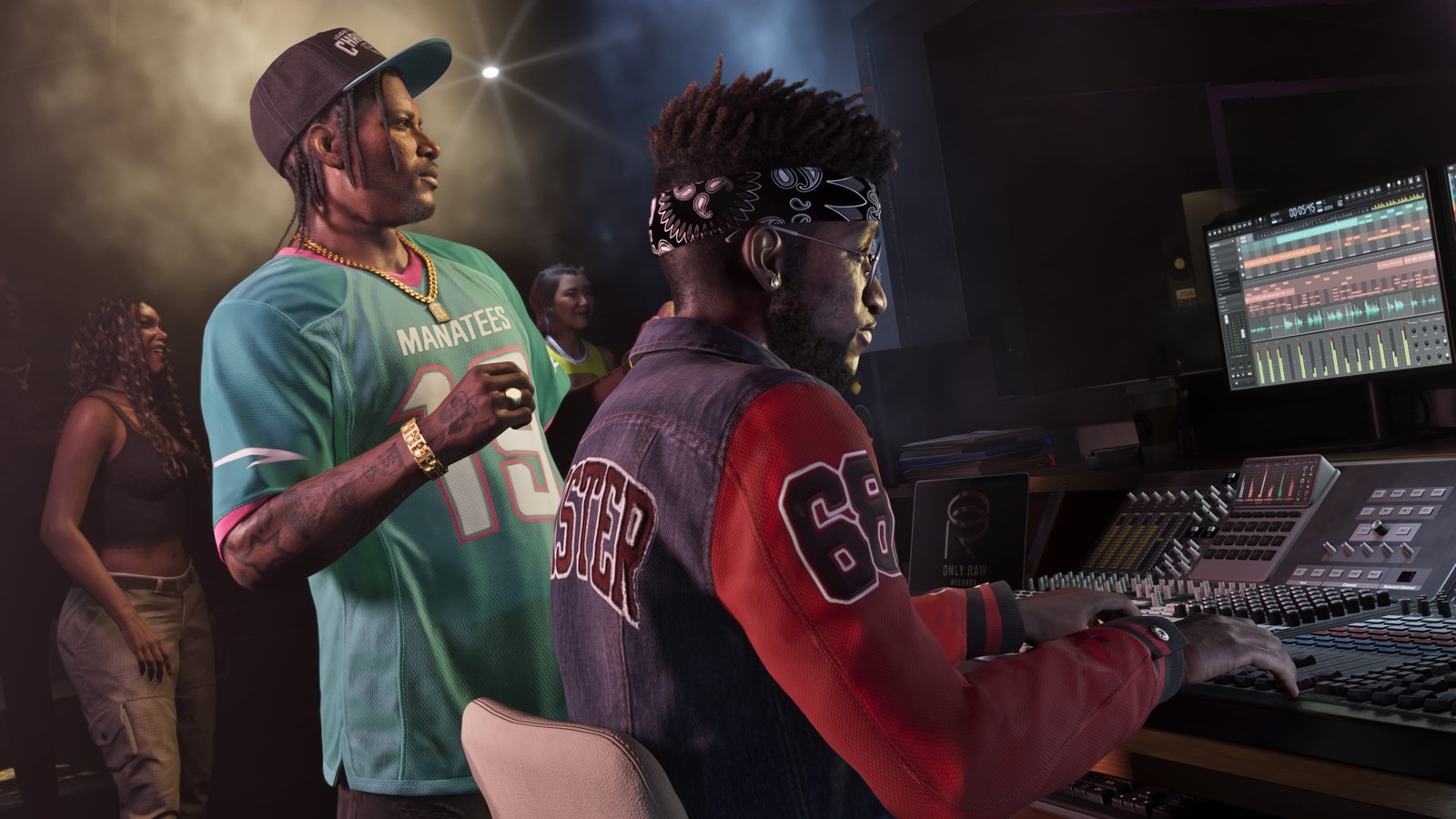
Rockstar's official GTA 6 music page previews stations spanning Latin music, country, African styles, metal, pop and southern rap. It also presents the original score and soundtrack album as separate music offerings. That is a useful starting point for studying the intended range, without treating a preview as a complete account of the released game's audio.
A careful analysis should ask whose music appears, how it is framed and what variety the selection represents. You can enjoy an energetic track while still examining the cultural context around its use. Music deserves the same attention to sources and creators that a feature about architecture, fashion or language would receive.
A station carries writing between the songs
The spaces between tracks can establish personality. A presenter can sound affectionate, boastful, cynical or exhausted. A fictional commercial can suggest what a culture values or sells. Those choices give radio a role in the game's writing, with the potential to reveal attitudes that the main story doesn't stop to explain.
That material also deserves criticism. Satire can be sharp, lazy, perceptive or unpleasant, and different listeners can read it differently. A useful discussion identifies the example and explains the interpretation. It shouldn't assume that every joke communicates the same meaning to every player.
When quoting a segment, keep the excerpt limited and provide context. Separate the fictional speaker from an unsupported claim about a creator's intention. You can explain how a broadcast functions in the game while acknowledging that your reading is an interpretation. That approach gives readers something more useful than declaring all the comedy successful or dismissing the whole station with one label.
Music and score serve different listening situations
A chosen radio track can create a sense of companionship during travel. A composed score can shape tension around an event. A soundtrack album can let you hear selected material away from the game. Those experiences can overlap, but they have different contexts worth examining separately.
Rockstar's current GTA 6 music page credits Justice with the original score and offers samples alongside station previews and soundtrack singles. An assessment after release should examine how the music responds during play, while album listening can focus on the compositions as recordings. One experience won't fully substitute for the other.
For the listener, this creates several routes toward the music. You may want a song you heard while driving, a piece associated with a story moment or a collection that works during your own day. Accurate titles and credits help you find the right material. A broad search for the soundtrack can otherwise mix trailers, fan compilations and official releases together.
A trailer song needs its own source trail
A track used in promotion can become strongly associated with a game before anyone plays it. That association doesn't by itself establish where the song appears in the finished product. Treat the trailer description, official music page and released credits as separate pieces of evidence.
When you share a music list, label what each entry represents. A trailer selection, a previewed station track and an album single may have different roles. A playlist created by a fan can be enjoyable while still containing guesses. Readers deserve to know which parts of a guide come from official material.
The same care applies to artists and hosts. Use the names and credits supplied by the relevant source, and avoid assigning a role based on a voice you think you recognize. Music reporting can be enthusiastic and precise at the same time. A source link lets the reader continue listening and check the credit without relying on a repeated rumor.
Listening outside the game changes the experience
A playlist can preserve access to a musical selection while removing the road, mission and fictional broadcast around it. That can be a benefit when you want to hear the music during another activity. It also changes the context that made the first encounter memorable.
Rockstar has offered official GTA Radio playlists on Spotify, linking listening outside the game with music associated with its stations. Those releases provide a useful route toward credited tracks. Their contents should be checked as playlists in their own right, without assuming they reproduce every broadcast segment or every version of an in-game station.
You can use an official playlist as a starting point for deeper listening. Follow an artist whose work interests you, seek the album containing a track or explore other releases from the same scene. The game has done the initial introduction. Your listening can continue with more context and a wider selection than the original journey provided.
Music has practical consequences for creators
Recording your gameplay can include music whose rights belong to other people. A song appearing inside a game doesn't automatically explain the permissions for your separate upload, commercial edit or livestream. Check the publisher's current video policy and the platform's music rules before building a project around recorded radio audio.
If a game offers music-related streaming settings, read what those settings cover and test the recording you intend to publish. A label in a menu shouldn't be treated as a universal promise about every sound in every scene. Keep the source of each track and any permission you obtain with your production notes.
When discussing a station editorially, your own narration and analysis can carry the argument. You can link to authorized music samples so readers can continue listening through the appropriate source. This keeps the focus on the music's role while avoiding an assumption that a review requires republishing an entire broadcast. Permission questions should be resolved for the specific use.
Give the audio the settings attention you give the picture
A comfortable balance can make dialogue easier to follow and keep music from overwhelming the parts you need to hear. Use the controls available in the game and console, adjusting one element at a time. Your preferred arrangement may differ between headphones, television speakers and a shared room.
Accessibility matters here too. Important information carried only through speech or sound needs a usable alternative for some players. Review the released game's subtitle, caption and visual-notification support through tested examples. A strong music selection doesn't answer those questions, and an audio review should make room for them.
You can also choose quiet. Enjoying GTA's radio history doesn't mean keeping music on during every moment of play. Turn it down or off when the available settings permit and your attention needs something else. The value of a station includes the choice to return to it when its mood suits the journey you want.
A useful listening comparison starts with one journey
You can examine the effect of a station using a route you already know in a game you own. Drive it once with your usual choice, then use a different available station or reduce the music during a later journey. Keep other conditions as similar as practical and describe what changed in your attention.
You might find that spoken programming draws you toward the writing, while music makes the trip easier to settle into. You might prefer the atmosphere with less radio. These are personal observations you can explain through a particular journey. They won't establish that every listener will respond in the same way. A clear account of your conditions gives someone else room to compare the experience with their own.
A lasting part of how a city is remembered
GTA's radio matters because it connects movement, writing, music discovery and personal choice inside one familiar action: going somewhere. You can remember a station as a sound, a voice or a particular journey. Its influence can continue when you follow an artist outside the game or revisit a place associated with a song.
For GTA 6, the official previews give us material to investigate while leaving the finished listening experience open to review. Useful coverage will credit the creators, distinguish previews from tested play and explain how the audio supports the world. A long track list can complement that work, but it can't complete the analysis by itself.
When you next explore a GTA city, give the sound a little attention. Choose a station you usually skip, follow a credited song beyond the game or spend part of a trip listening to the atmosphere around you. You may discover another route into a world you thought you already knew.
Sources and further reading
- Rockstar Games official GTA VI page ↗
- The Music of GTA VI, official samples and credits ↗
- Rockstar Games GTA Radio playlists ↗
Source-based reporting and analysis. Research checked November 10, 2026.